
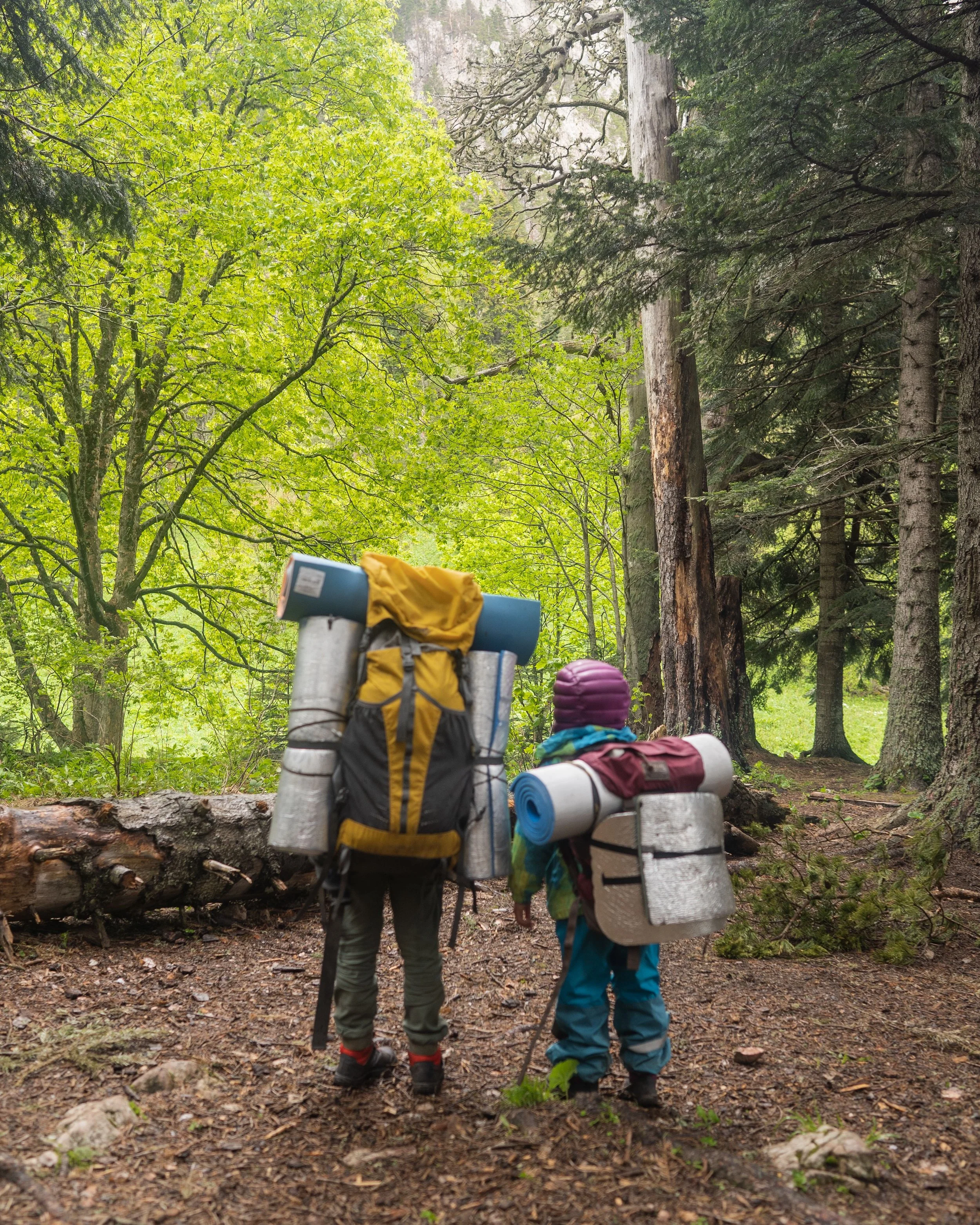
Summer marks a shift in rhythm. If your child bounded out the school door at the start of summer break with pure relief or felt a little unmoored by the change, even the most welcome transitions carry a loosening of predictability and children's nervous systems notice.
Children are creatures of pattern. Their sense of safety is quietly organized around the daily, weekly, and seasonal rhythms of family life. When that structure shifts, even joyfully, you might notice it as crankiness, restlessness, anxiousness, or more bumps and bruises than usual. This is completely normal.
Let’s be clear: rhythm doesn't mean rigidity. It means a morning walk, a weekly trip to the lake, a ritual that signals the shape of the day. These small, familiar moments become the exhale that summer is meant to be.
And then there are the adventures.
Unstructured free play in nature is irreplaceable, and so are intentional adventures in which children genuinely depend on their parents. Secure Attachment experts like Gordon Neufeld and John Bowlby have long emphasized that secure attachment grows from the experience of being led by a patient parent and feeling safe when encountering new experiences. Nature settings offer this in abundance.
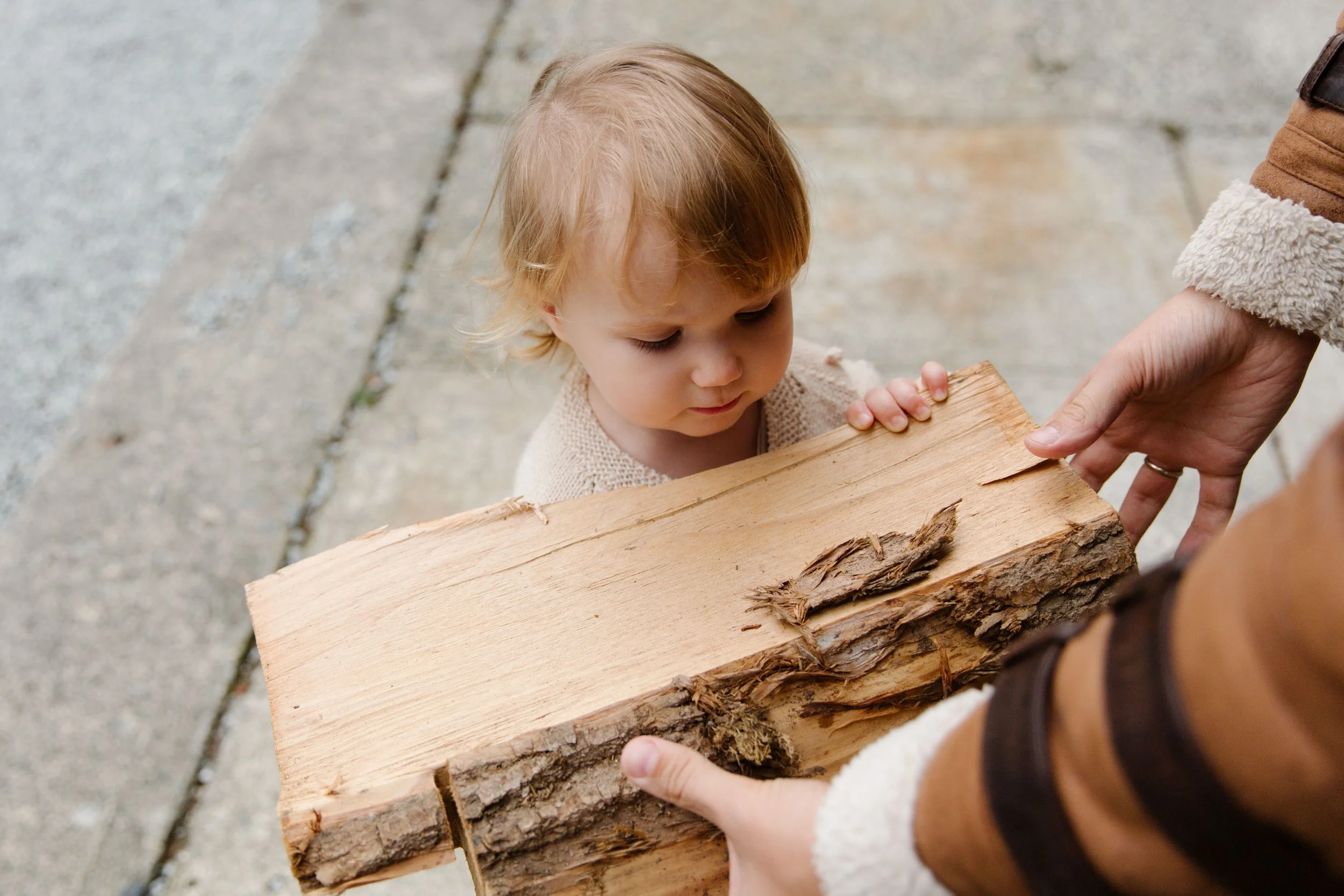
Our family discovered this through years of camping together. When our daughter was a toddler, she'd copy us as we collected kindling, doing so with glee and purpose. By school age, she was stacking logs, then later building and safely lighting the fire. In her early teens, she was coordinated and strong enough to carry logs from the car to the site. Roasting marshmallows, of course, wove its way through every stage — a ritual in its own right. A simple camping trip was building something lasting: consistency in mom and dad modelling new skills, and, for her, competence, confidence, and a deep sense of safety to explore new capabilities that connected her to herself, her parents, and her environment.
That progression — from observer to participant to independent taking initiative — is secure attachment made visible.
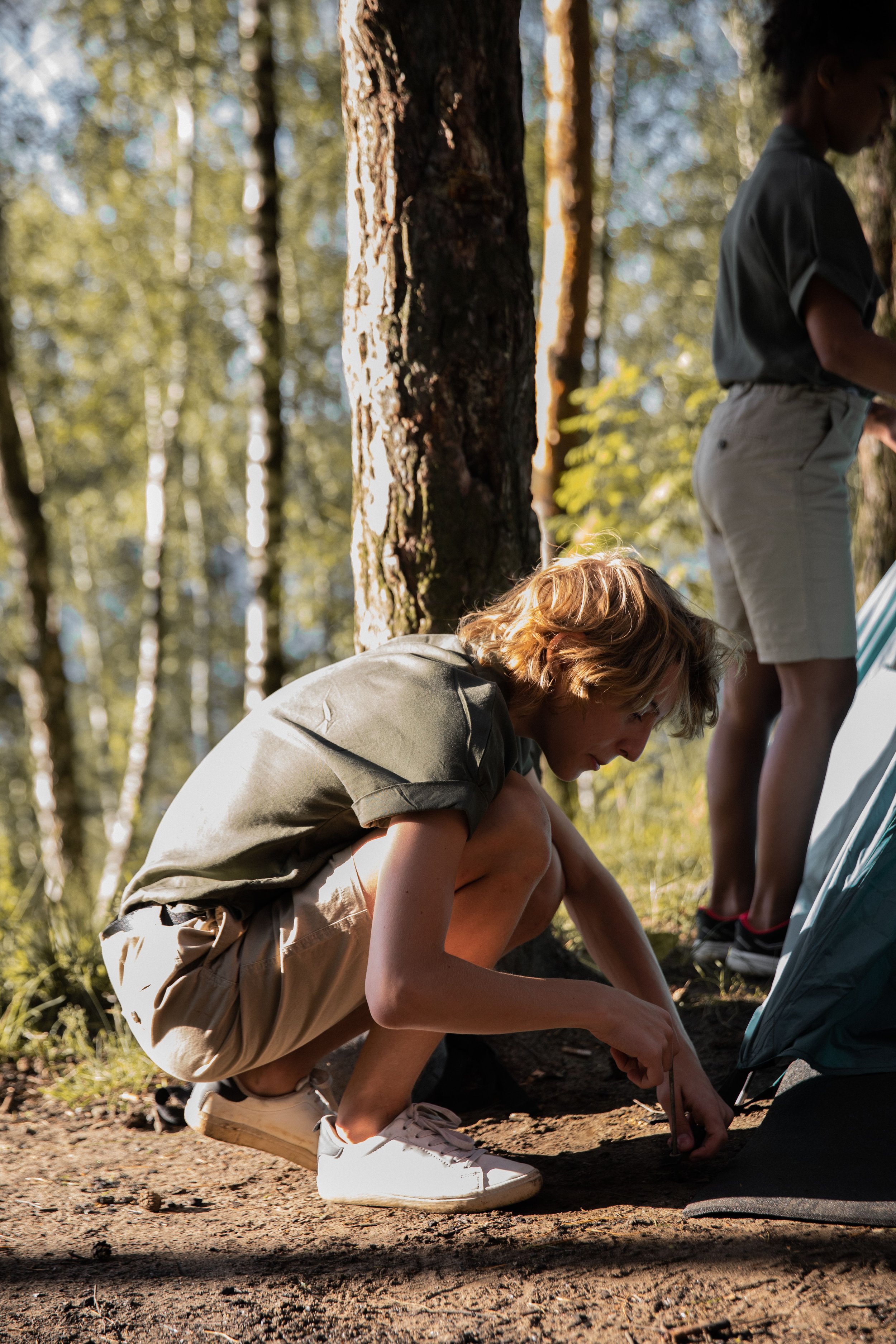
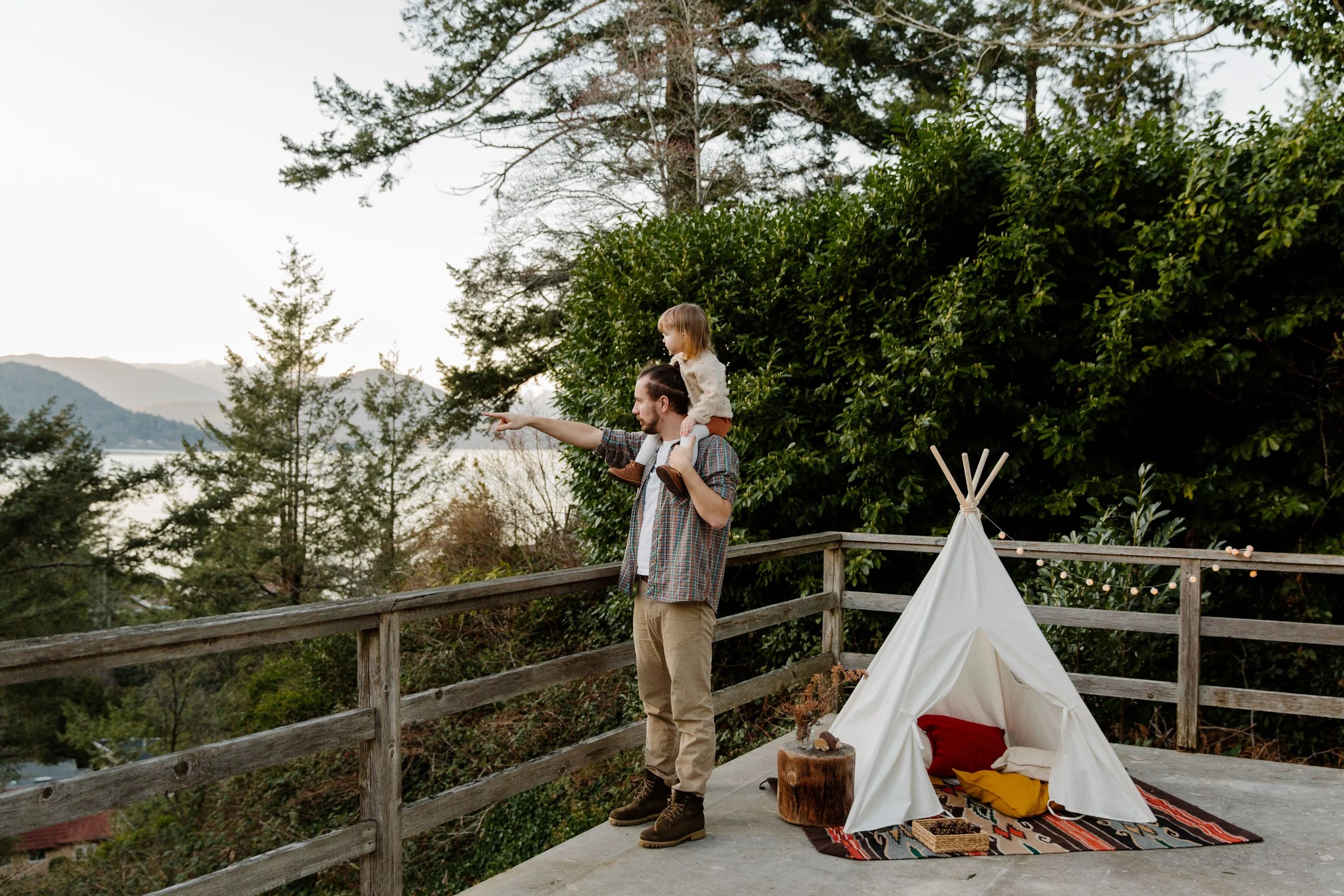
It can be a tent pitched in the backyard, a car camping weekend, or a journey to one of Vancouver Island's breathtaking river, lake, ocean shore, or deep forest campsites; the principle is the same. Children are naturally curious when they see their parents doing things differently from how they do at home. It’s refreshing to be invited in to learn and do something new — the message is “I believe in you” and “I’m here for you”. The space to contribute is so meaningful to a child and nurtures self-confidence and a sense of belonging. Their expansion of self is witnessed and celebrated through the dynamics of collaborative energy.
Summer adventures also bring the inevitable tumbles: scraped knees, twisted ankles, a frightening incident in water, a knock to the head, or the social anxiety of meeting new people at summer camp. How parents respond matters enormously. Calm presence and practical care communicate “I've got you” in a way that words alone can't.
When an experience leaves lingering effects in a child's body or nervous system — physical or emotional — pediatric biodynamic craniosacral therapy (BCST) can offer gentle support. BCST helps children reconnect with their bodies after injury or fright, restoring a sense of ease and inner trust that supports both healing and confidence.
Nurturing a reliable sense of dependence while making room for growing autonomy encourages children to explore, adapt, and develop into who they are becoming. Summer, at its best, is the season when that happens most naturally.
Christina Hamill is the founder of Early Beginnings Wellness in Duncan, BC, offering biodynamic craniosacral therapy, lactation support, and newborn and pediatric care. She practises at Sol Centre in Duncan, BC, and offers online sessions to families across Canada. Find her at earlybeginningswellness.com.